
Epigenetic insights into extreme longevity in the world’s oldest terrestrial animal, Jonathan
/Benjamin Vaisvil, Daniel P. Schmitt, Angela Jones, Vinayak Kapatral, James M. Ford, Madison L. Taylor, Mathia Colwell, Jonathan Hollins, Sam Pascucci, Konstantin Weissenow, Burkhard Rost, Pascal Notin , Justin Gerlach, Thomas C. Terwilliger, Li-Wei Hung, Lars Juhl Jensen, Kathlyn Reed, Todd R. Robeck, Steve Horvath, Christopher Faulk, Yanjun Ma, and Stephen W. Clark
Abstract
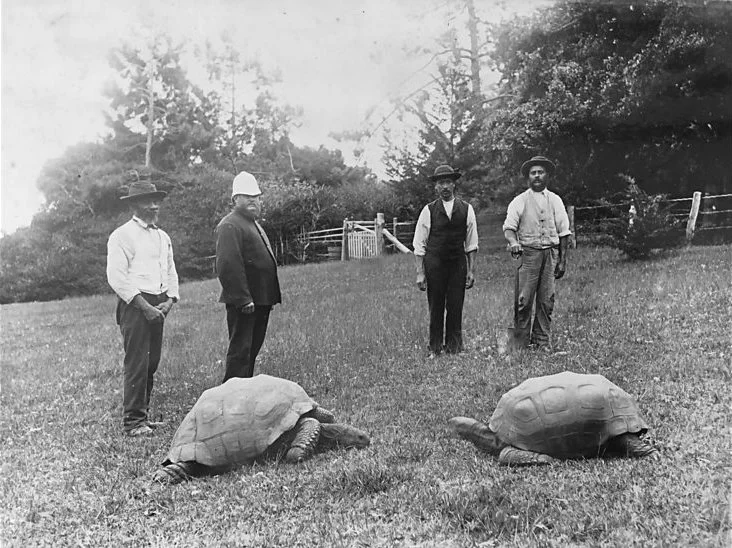
Aldabra giant tortoises (Aldabrachelys gigantea) are exceptionally long-lived. We sequenced the genome and methylome of Jonathan, a 194-year-old Aldabra, to explore the molecular basis of his longevity. Relative to other giant tortoises (A. gigantea and Chelonoidis abingdonii), Jonathan has unique gene variants in most aging pathways. Moreover, Jonathan has substantial DNA methylation and methylation entropy changes compared to four other Aldabras ranging in age from a 5-year-old juvenile to older adults. Notably, we found that lower-entropy regions in Jonathan’s methylome were enriched for the promoters of genes involved in the mitochondrial electron transport chain, and RNA metabolism. This suggests that high-fidelity transcription of the genes in these pathways may be crucial for long-lived species. Our findings support a model for aging wherein the maintenance of low methylation entropy in gene promoters is coupled to efficient mitochondrial energy production, efficient RNA processing, and efficient genomic repair.